

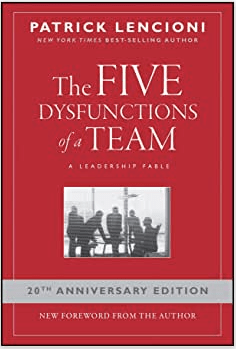
“The 5 Dysfunctions of a Team” by Patrick Lencioni is a powerful leadership book that explores the common pitfalls that hinder team performance and offers practical strategies for overcoming them.
This summary aims to provide new managers or people who aren’t familiar with the book’s core concepts with a concise overview of the five dysfunctions and actionable steps to address them effectively.
So, let’s dive in.
The Five Dysfunctions
1. Absence of Trust
Trust serves as the foundation for any successful team. When team members are hesitant to be vulnerable and open with one another, it leads to an absence of trust. To overcome this dysfunction:
- Lead by example and be vulnerable first, sharing personal experiences and challenges.
- Encourage open communication and create a safe environment where team members can express their opinions without fear of judgment.
- Foster team-building activities and exercises that promote trust and camaraderie.
“Remember teamwork begins by building trust. And the only way to do that is to overcome our need for invulnerability.”
― Patrick Lencioni, The Five Dysfunctions of a Team: A Leadership Fable
2. Fear of Conflict
A lack of trust breeds a fear of conflict within a team. When team members are reluctant to engage in healthy debate, challenging discussion, or difficult conversation, it stifles creativity and results in mediocre results. To overcome this dysfunction:
- Establish norms that encourage healthy debate and constructive criticism.
- Teach conflict resolution skills to team members and promote the idea that conflict, when managed effectively, leads to better decisions.
- Encourage diverse perspectives and create a culture where disagreements are seen as opportunities for growth.
“Great teams do not hold back with one another. They are unafraid to air their dirty laundry. They admit their mistakes, their weaknesses, and their concerns without fear of reprisal.”
― Patrick Lencioni, The Five Dysfunctions of a Team: A Leadership Fable
3. Lack of Commitment
Without healthy conflict, team members often fail to reach a clear consensus, resulting in a lack of commitment. When individuals are not fully committed to a decision, the team’s progress is hindered. To overcome this dysfunction:
- Ensure that all team members actively participate in decision-making processes and have their voices heard.
- Foster clarity by defining goals, roles, and responsibilities, ensuring that everyone understands the team’s objectives.
- Encourage open dialogue around commitments and hold team members accountable for their contributions.
“Commitment is a function of two things: clarity and buy-in”
― Patrick Lencioni, The Five Dysfunctions of a Team: A Leadership Fable
4. Avoidance of Accountability
When team members are not committed to their roles and objectives, accountability suffers. In a culture of low accountability, individuals are hesitant to hold one another responsible, resulting in missed deadlines and subpar performance. To overcome this dysfunction:
- Set clear expectations and define measurable goals for each team member.
- Establish regular check-ins and progress reviews to monitor performance and provide constructive feedback.
- Encourage a sense of collective responsibility, where team members hold each other accountable for achieving the team’s objectives.
“Some people are hard to hold accountable because they are so helpful. Others because they get defensive. Others because they are intimidating. I don’t think it’s easy to hold anyone accountable, not even your own kids”
― Patrick Lencioni, The Five Dysfunctions of a Team: A Leadership Fable
5. Inattention to Results
The ultimate dysfunction occurs when team members prioritise their individual goals over the collective results of the team. When personal ambitions overshadow the team’s success, it hampers overall performance. To overcome this dysfunction:
- Foster a shared sense of purpose and emphasise the team’s common goals and objectives.
- Reward and recognise behaviours that contribute to the team’s success, promoting a culture of collaboration and cooperation.
- Regularly assess and celebrate the team’s progress towards achieving measurable outcomes.
“To achieve results. This is the only true measure of a team.”
― Patrick Lencioni, The Five Dysfunctions of a Team: A Leadership Fable
Breaking it down
Next, we need to understand that each dysfunction is connected to the next. Let’s hear from Patrick Lencioni himself on how “The 5 Dysfunctions” relate and feed into one another:
In the Real World
As a manager, your job is to start at the bottom of the pyramid (trust), and work your way to the top, addressing each dysfunction as you go. Now that we have a better understanding of the framework, let’s look at some simple, hypothetical examples of how “The 5 Dysfunctions” framework can be applied across different sectors.
Example 1: Company A – Technology Startup
Company A, a technology startup, recognised that their lack of teamwork was hindering their progress and innovation. They decided to implement “The 5 Dysfunctions” framework to address their challenges. The leadership team focused on building trust by fostering open communication and transparency. They encouraged team members to share their ideas, concerns, and feedback without fear of judgment. As a result, team members felt more comfortable collaborating and taking risks.
By embracing healthy conflict, they were able to engage in productive discussions and make better decisions. The team established clear goals and roles, ensuring commitment and accountability. Regular check-ins and performance reviews were implemented to monitor progress and provide feedback. With a renewed focus on collective results, Company A achieved a more cohesive and effective team, resulting in increased innovation and accelerated growth.
Example 2: Hospital B – Healthcare Organisation
Hospital B, a large healthcare organisation, faced challenges in providing quality patient care due to poor teamwork among its medical staff. Recognising the importance of addressing these dysfunctions, the hospital leadership implemented the “5 Dysfunctions of a Team” framework.
They conducted trust-building exercises and workshops to improve relationships and foster open communication among the medical staff. They encouraged doctors, nurses, and other healthcare professionals to voice their concerns and collaborate effectively. The hospital also established a clear decision-making process that encouraged healthy conflict and diverse perspectives. Team members were held accountable for their responsibilities, and performance metrics were established to track progress.
By emphasising the shared goal of delivering excellent patient care, Hospital B achieved a more cohesive and patient-centric team, leading to improved healthcare outcomes and patient satisfaction.
Example 3: Marketing Department C – Large Corporation
Marketing Department C, a division of a large corporation, faced challenges with a lack of collaboration and low accountability, resulting in missed deadlines and ineffective campaigns. The department’s leadership decided to implement the “5 Dysfunctions of a Team” framework to address these issues. They initiated team-building activities and trust-building exercises to create a safe and open environment for communication.
Conflict resolution training was provided to team members, enabling them to engage in healthy debates and provide constructive feedback. The department established clear project goals and milestones, ensuring commitment from all team members. Regular performance reviews and peer evaluations were conducted to promote accountability.
By shifting the focus to collective results and celebrating successful campaigns as team achievements, Marketing Department C experienced improved collaboration, increased efficiency, and a higher level of campaign effectiveness, ultimately leading to greater business impact.
Additional reading and activities
Here are some additional content suggestions that can be useful for managers in understanding and implementing the “5 Dysfunctions of a Team” framework:
- Read the Book: “The Five Dysfunctions of a Team” by Patrick Lencioni is the original source that provides in-depth insights into each dysfunction and offers a comprehensive framework for addressing them. Reading the book will provide managers with a deeper understanding of the concepts, real-life examples, and practical strategies for implementation. While you’re waiting on your book order, you can start here.
- Team Assessments and Surveys: Utilise team assessments and surveys to gauge the current state of your team and identify areas of improvement. Assessments such as the Team Assessment from Patrick Lencioni’s “The Five Dysfunctions of a Team” can provide a snapshot of your team’s strengths and weaknesses, helping managers pinpoint the specific dysfunctions that need to be addressed. We’re working on an online Team Assessment tool, so stay tuned.
- Coaching and Mentorship: Engage in coaching or seek mentorship from experienced leaders who have successfully implemented the framework. Their guidance can provide personalised insights, practical tips, and support throughout the implementation process.
- Team-Building Activities and Retreats: Organise team-building activities and retreats that promote trust, encourage healthy conflict, and foster teamwork. These events can provide opportunities for team members to connect, build relationships, and practice the principles outlined in the framework.
- Ongoing Communication and Feedback: Implement a culture of ongoing communication and feedback within your team. Encourage regular check-ins, provide constructive feedback, and create channels for open dialogue. This helps in building trust, promoting accountability, and addressing any emerging dysfunctions promptly.
- Explore additional online resources. Here are some videos that might be helpful in better understanding and implementing “The 5 Dysfunctions.”
In “The 5 Dysfunctions of a Team,” Patrick Lencioni outlines the fundamental dysfunctions that impede team effectiveness and provides actionable strategies for new managers to address them. By fostering trust, embracing healthy conflict, promoting commitment, encouraging accountability, and emphasising collective results, managers can lead their teams towards higher performance, greater collaboration, and lasting success.
 ideation lab